IDEAS
What Do You Do When Your Old Map Stops Working?
When AI Changes The World Faster Than Your Understanding?
By Eugene L. Morrison
Have you ever found yourself in a place you thought you knew, only to discover that everything around you had changed?
Perhaps you returned to a neighborhood after many years.
The streets were familiar, but the buildings were different. Businesses you remembered had disappeared. New roads had been constructed. Landmarks you once depended upon were no longer there.
You knew where you were.
But for a moment, you didn’t know how to navigate.
Your old map no longer matched the territory.
I believe something similar is happening to many of us in the age of artificial intelligence.
We spent years learning how the world worked.
We developed skills, built careers, established routines, and formed assumptions about what it takes to accomplish meaningful things.
We learned that certain tasks required particular expertise.
That creating something ambitious often meant assembling a team.
That producing professional work required specific tools, training, and experience.
And then artificial intelligence began changing the conditions.
Suddenly, a person could hold a conversation with a system capable of drafting, analyzing, organizing, translating, designing, and helping solve problems across many fields.
Work that once seemed beyond an individual’s reach began to look possible.
Questions that once required considerable effort could receive thoughtful responses in seconds.
The landscape changed.
And many of us were left wondering where we stood.
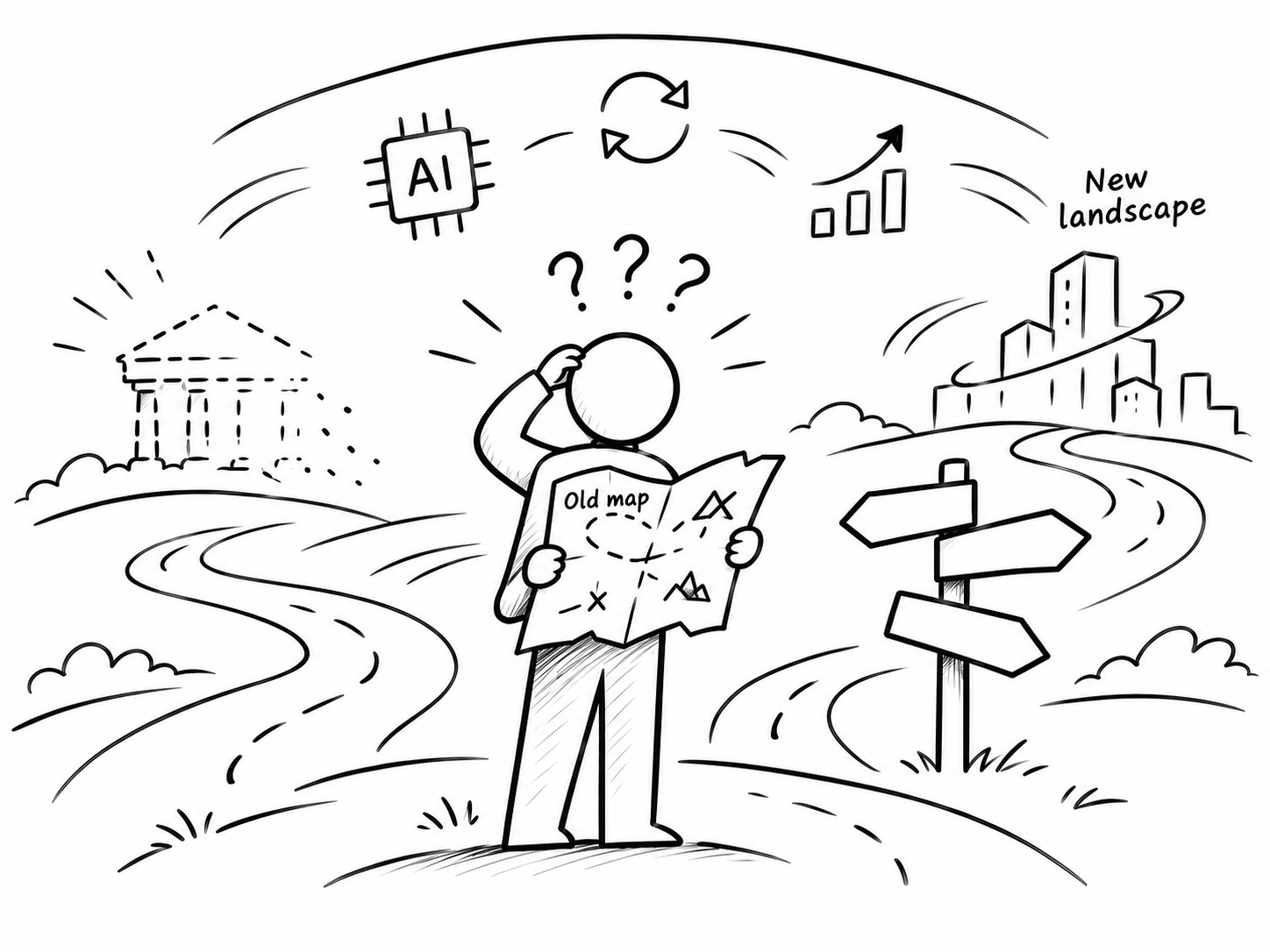
We’re talking about the first stage of Human-AI Mastery:
Disorientation.
Disorientation Is More Than Confusion
When I use the word disorientation, I’m describing something deeper than simply not knowing which AI tool to use.
I’m describing the experience of entering a new environment without yet having a reliable way to navigate it.
You sense that something important is happening.
You recognize extraordinary possibilities.
You may even feel excited about what artificial intelligence could help you accomplish.
But you haven’t yet established a clear relationship between those possibilities and your own life.
So your attention moves in different directions.
One day you’re fascinated by AI-generated video.
The next day you’re investigating automation.
Then you discover an article suggesting that entire professions may change.
You begin wondering whether the skills you’ve spent years developing will remain valuable.
You watch a demonstration of someone building an application in minutes.
You wonder whether you should learn to do that, too.
And before long, your excitement of possibility begins mixing with uncertainty.
What should I learn?
What should I ignore?
Am I already behind?
Will my work still matter?
What should I be doing right now?
These are not merely technical questions.
They touch our sense of competence, identity, security, and purpose.
That’s why the AI revolution can feel so personal.
It isn’t simply introducing new machines into our workplaces.
It’s changing our relationship with activities we once considered uniquely human.
Thinking.
Writing.
Creating.
Analyzing.
Solving problems.
And when the environment changes at that level, disorientation is understandable.
But here’s what I want you to recognize.
Disorientation is a stage you must move through, not a permanent condition you must accept.
The fact that the landscape has changed doesn’t mean you’ve lost your ability to navigate.
It means you need a better way to establish your position.
And before you can do that, you need to regain control of something essential.
Your attention.
The Three Forces That Pull Us Off Course
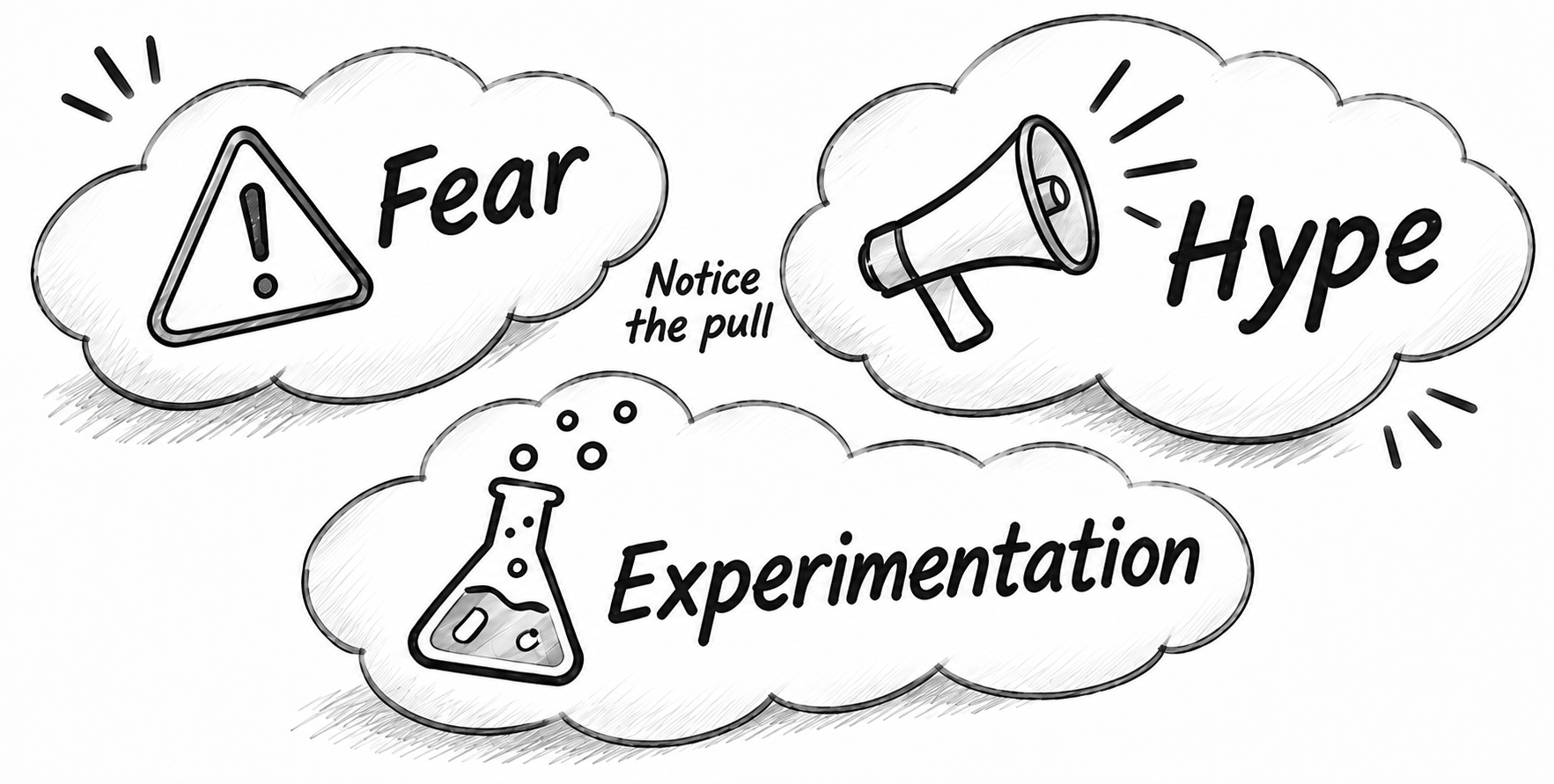
I want you to consider three forces that frequently shape our experience of artificial intelligence.
Fear.
Hype.
And experimentation.
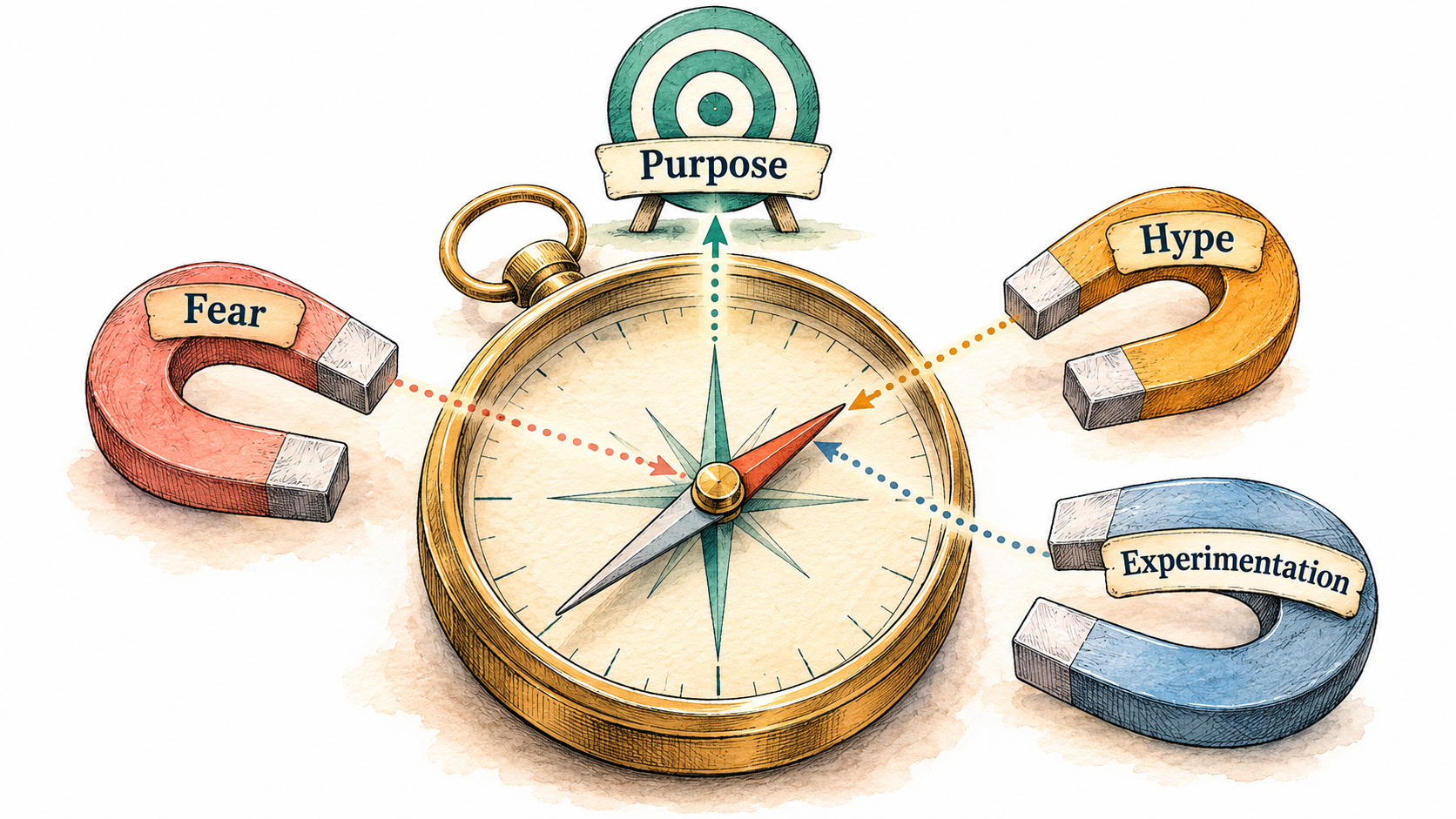
Each can influence where we direct our attention.
And each can become a problem when it begins making decisions for us.
Fear often begins with uncertainty.
Perhaps you read that AI may change your profession.
Perhaps you see someone accomplish a task in minutes that once required hours.
Perhaps you wonder whether your experience, education, or expertise will remain valuable.
Fear can make every new announcement feel urgent.
You begin investigating tools not because you have a clear purpose, but because you don’t want to be left behind.
You tell yourself that you need to learn everything.
But everything is an impossible assignment.
Hype creates a different kind of pressure.
A new platform appears, accompanied by extraordinary promises.
Someone declares that it will transform business.
Someone else insists that anyone who fails to adopt it immediately will miss a once-in-a-generation opportunity.
And suddenly, you’re wondering whether you should abandon what you were working on yesterday.
The difficulty is that even genuinely useful technology can be surrounded by exaggerated expectations.
The challenge is learning to distinguish real opportunity from manufactured urgency.
Then there’s experimentation.
I want to be careful here because experimentation is not the enemy.
In fact, experimentation is essential to learning.
I encourage you to explore.
Ask questions.
Try things.
Discover what artificial intelligence can do.
But experimentation becomes a distraction when it has no connection to a meaningful objective.
You can spend hours testing capabilities without developing a clearer understanding of what you want to accomplish.
You can create dozens of impressive demonstrations without building anything you intend to use.
You can become an enthusiastic explorer who never quite becomes a Builder.
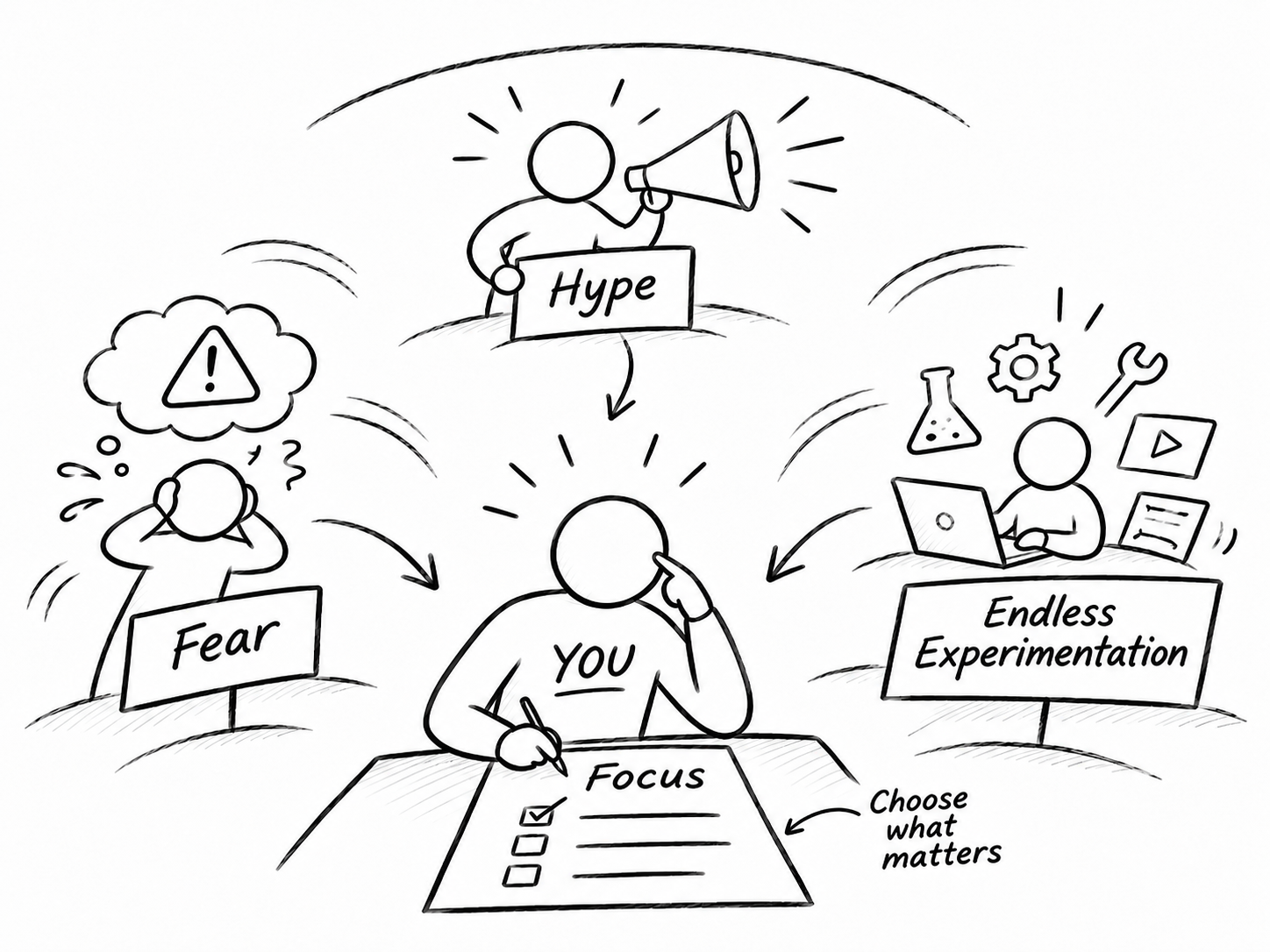
Fear, hype, and experimentation can all pull your attention away from your priorities.
And here’s the important point.
You don’t necessarily have to eliminate these experiences.
You need to recognize them.
Because once you can recognize what is influencing your attention, you can begin making more intentional choices.
Attention Is Your First Human-AI Capability
In my work, called The 7 Stages of Human AI Mastery, “Disorientation” is the first stage and it is associated with a specific capability:
Attention.
Not speed.
Not prompting.
Not automation.
Attention.
Why begin there?
Because before you can develop a meaningful relationship with artificial intelligence, you need to decide what deserves your attention.
Think about that.
You may have access to an AI assistant capable of helping you explore thousands of subjects.
But you still have a limited amount of time.
You still have responsibilities.
You still have interests, ambitions, and commitments.
And you still have to decide what matters.
Artificial intelligence can expand your possibilities.
It cannot make every possibility equally important.
That distinction becomes critical.
Without intentional attention (I sometimes refer to this as Focus), abundant intelligence can scatter your efforts.
With intentional attention, the same intelligence can help you make remarkable progress.
Imagine a person who wants to write a book.
They begin by researching AI writing tools.
Soon, they discover applications for outlining, editing, research, cover design, publishing, marketing, and audiobook production.
All of those capabilities might eventually be useful.
But suppose the person hasn’t yet decided what the book is about or whom it is intended to help.
What is the most important task?
Learning another application?
Or clarifying the book’s purpose?
The answer seems obvious when we slow down and consider it.
But in the middle of the AI information storm, obvious things can become surprisingly difficult to see.
That’s why attention is the first capability.
It allows us to begin separating what matters from what merely demands to be noticed.
Everything Doesn’t Deserve Your Attention
Let me offer you a simple thought.
Just because something is interesting doesn’t mean it’s important right now.
And just because something is possible doesn’t mean it’s worth pursuing.
These distinctions may be among the most valuable you’ll make in the AI age.
I know how easy it is to encounter an impressive demonstration and immediately imagine how it might be useful.
There’s nothing wrong with curiosity.
In fact, curiosity is a keystone to working with and mastering AI. But curiosity needs direction.
Otherwise, it can carry us from one possibility to another without bringing us closer to anything meaningful.
Consider the difference between three categories of AI-related activity.
Essential.
These are the tools, ideas, and capabilities that directly support something important you’re trying to accomplish.
Interesting.
These are things that may be useful someday, but they don’t deserve immediate attention.
Noise.
These are activities that consume your attention without contributing meaningful value.

Now, here’s the part that can be difficult.
Something can be genuinely impressive and still belong in the Interesting category.
Something can be popular, exciting, and widely discussed and still be Noise for you.
That’s not a judgment about the technology.
It’s a judgment about its relevance to your present priorities.
And making that judgment is part of developing AI mastery.
The Personal AI Focus Map
Would you mind I introduce you to the first operating artifact in my 7 Stages of Human-AI Mastery framework?
It’s called the Personal AI Focus Map.
By the way, an operating artifact is something you create and return to as you develop your capabilities.
It isn’t merely an exercise you complete and forget.
It’s a practical reference that helps you operate more intentionally.
Your Personal AI Focus Map serves one central purpose:
To help you regain control of your attention.
In what I call the Seven Stages Builder experience, this map is developed through your reflection, an audit of AI-related activity, your deliberate elimination of unnecessary things and activities, and your commitment to meaningful work.
For now, let’s create a simple starting version.
You can use a notebook, a blank document, or a piece of paper.
I want you to identify five things.
1. What meaningful work deserves my attention?
Think about something you genuinely want to accomplish.
It might be a professional project.
A business idea.
A creative ambition.
A decision you’ve been postponing.
A skill you want to develop.
Or a problem you’ve been trying to solve.
Choose something that matters to you.
You don’t have to define every detail yet.
That comes later.
For now, name the work.
2. Which AI capabilities could genuinely help?
Don’t begin by listing every platform you’ve heard about.
Think in terms of capabilities.
Could AI help you research?
Organize ideas?
Compare alternatives?
Draft material?
Analyze information?
Explore a design?
Identify gaps in your thinking?
Choose the capabilities most relevant to your work.
| # | Category | Essential Question | Core Focus & Guidance |
|---|---|---|---|
| 1 | Primary Work | What meaningful work deserves my attention? | Select a project, business idea, creative ambition, or key problem that genuinely matters to you. |
| 2 | AI Alignment | Which AI capabilities could genuinely help? | Identify specific capabilities (researching, drafting, organizing, analyzing) directly aligned with your work. |
| 3 | Distractions | What is distracting me? | Audit attention-drains (tool hopping, unread newsletters, half-finished tests) objectively and without self-judgment. |
| 4 | Priorities | What am I choosing to ignore for now? | Deliberately set aside non-essential tools and topics to protect focus for core priorities. |
| 5 | Next Action | What one action will I take next? | Commit to a single, immediate step (such as drafting an outline or defining an audience) to generate real momentum. |
1. Primary Work — What meaningful work deserves my attention?
Select a project, business idea, creative ambition, or key problem that genuinely matters to you.
2. AI Alignment — Which AI capabilities could genuinely help?
Identify specific capabilities (researching, drafting, organizing, analyzing) directly aligned with your work.
3. Distractions — What is distracting me?
Audit attention-drains (tool hopping, unread newsletters, half-finished tests) objectively and without self-judgment.
4. Priorities — What am I choosing to ignore for now?
Deliberately set aside non-essential tools and topics to protect focus for core priorities.
5. Next Action — What one action will I take next?
Commit to a single, immediate step (such as drafting an outline or defining an audience) to generate real momentum.
3. What is distracting me?
Now consider the AI-related activities that have been consuming your attention.
Perhaps you’re following too many newsletters.
Perhaps you’re constantly comparing applications.
Perhaps you’ve started several experiments but haven’t completed anything meaningful.
Perhaps you’re spending more time learning about AI than applying it.
Identify the distractions without criticizing yourself.
The goal is awareness.
4. What am I choosing to ignore for now?
This is where your map begins to become powerful.
Make a deliberate decision about what can wait.
You are not declaring that those things have no value.
You’re simply deciding that they don’t deserve your attention at this moment.
And that decision creates space for meaningful work.
5. What one action will I take next?
Choose a small action that moves your work forward.
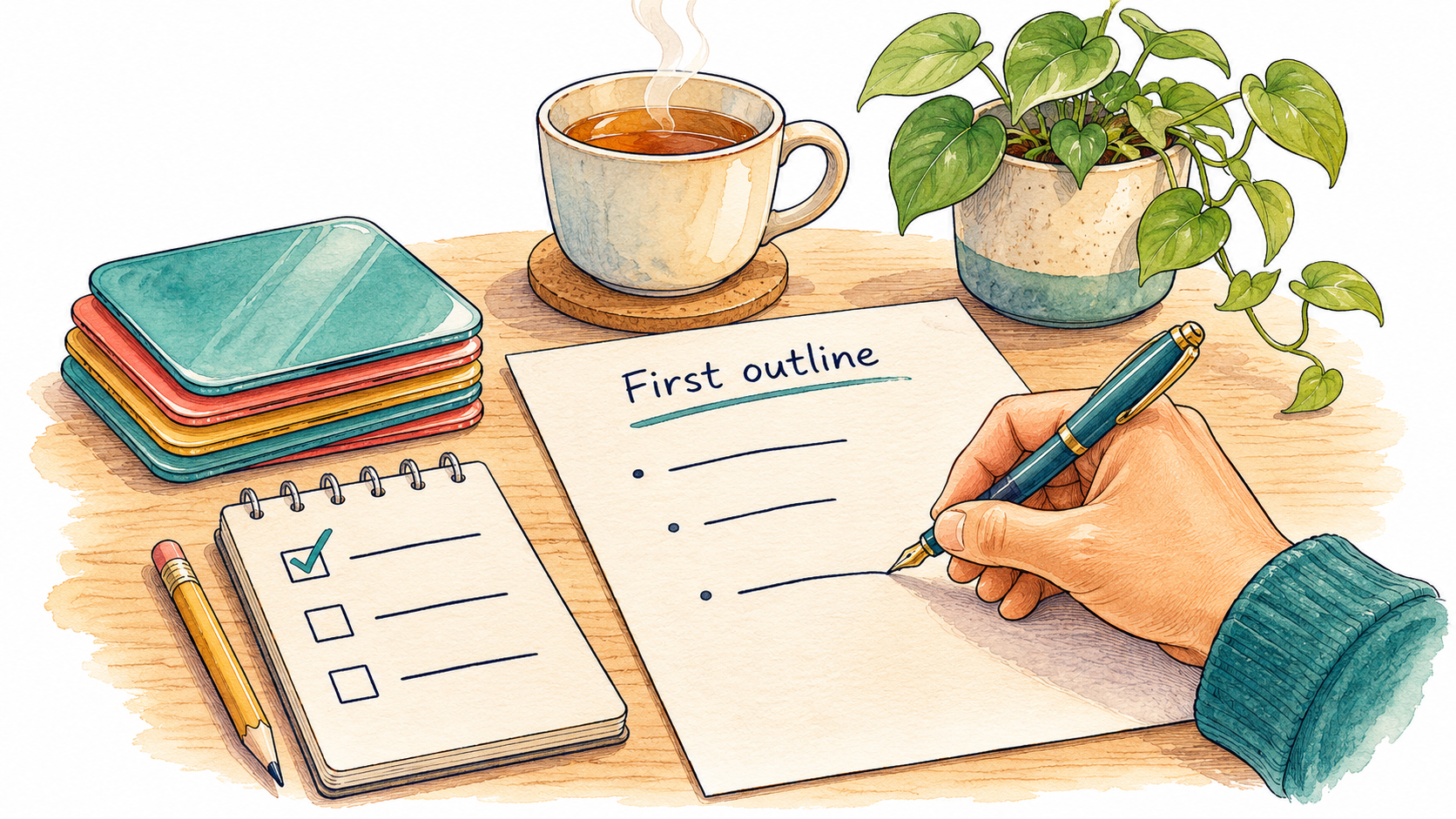
It could be writing an outline.
Defining an audience.
Researching an important question.
Making a decision.
Creating a first draft.
Or beginning a conversation with someone who can help.
The action doesn’t need to be impressive.
It needs to be meaningful.
Because we’re not trying to create the appearance of progress.
We’re trying to make progress.
Your First Focus Map
Take a moment and complete these statements.
The meaningful work I want to move forward is:
The AI capabilities most relevant to that work are:
The biggest distractions competing for my attention are:
What I am choosing to ignore for now:
The one meaningful action I will take next:
That’s it.
You now have the beginning of a Personal AI Focus Map.
Not the complete operating artifact developed through the full Builder process.
But a useful starting point.
And more importantly, you’ve practiced the first capability of Human-AI Mastery.
You’ve directed your attention intentionally.
Let AI Help You Focus—Without Letting It Choose for You
Here’s another way to strengthen this exercise.
Open your preferred AI assistant and begin a conversation.
You might say:
I’m developing a Personal AI Focus Map. One meaningful project I want to move forward is [describe your project]. I’m interested in several AI capabilities, but I don’t want to become distracted by tools that aren’t relevant right now.
Ask me questions that will help me identify my most important priorities, the capabilities that could support them, and the activities I should consider setting aside. Help me think through the choices, but leave the final decisions to me.
Notice what we’re doing.
We’re not asking AI to tell us what our lives should be about.
We’re asking it to help us examine our own priorities.
That’s an important distinction.
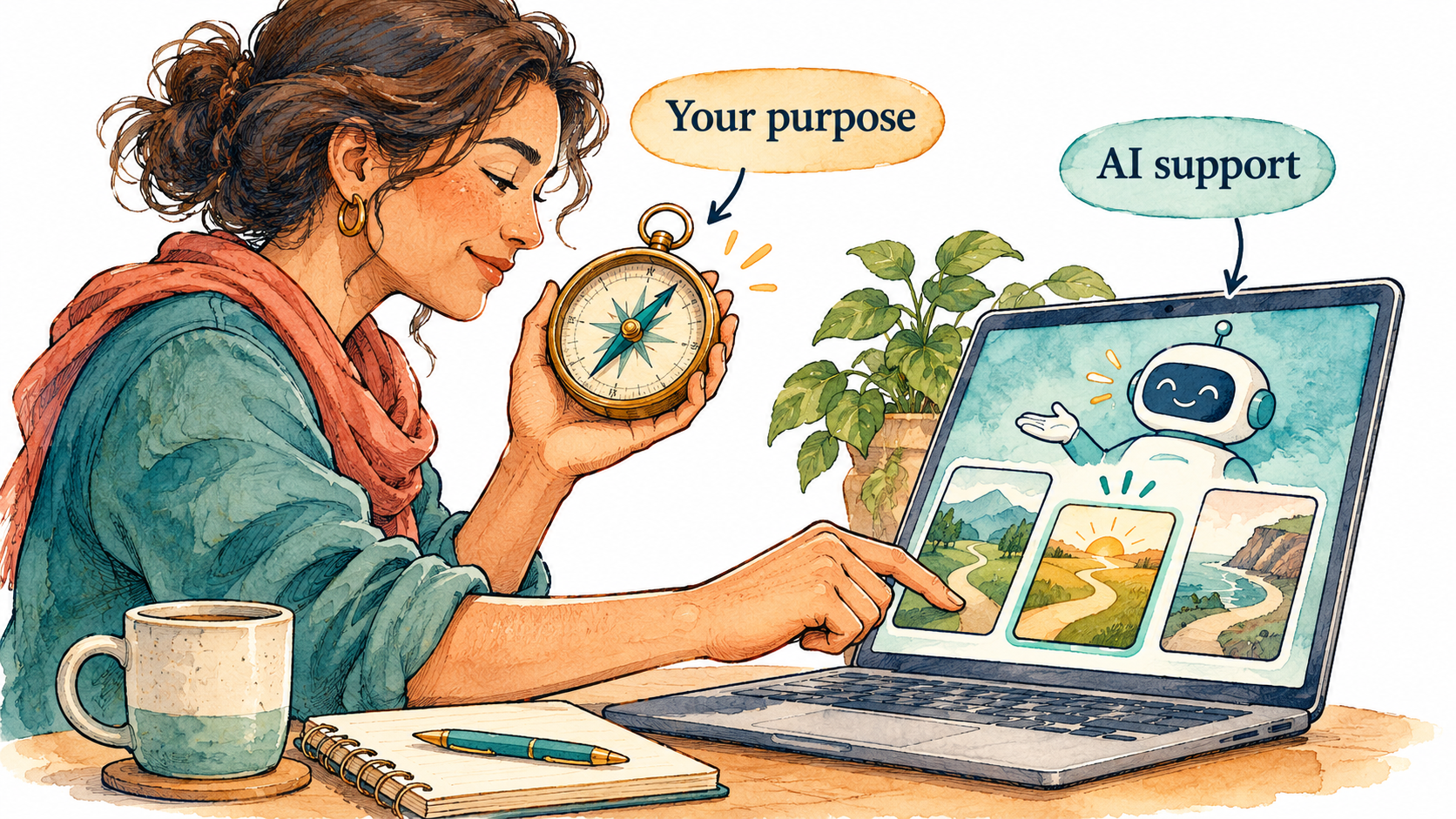
Artificial intelligence can contribute questions, alternatives, and useful observations.
But you provide the purpose.
You provide the context.
And you retain responsibility for the decisions.
This is one of the principles we’ll continue developing throughout the Seven Stages.
The goal is not to surrender your thinking.
It’s to strengthen it.
A Small Experiment in Attention
I’d like you to try something over the next seven days.
Each morning, before you begin exploring AI-related news, applications, or demonstrations, ask yourself one question:
What deserves my attention today?
Then look at your Personal AI Focus Map.
Identify one action that supports your meaningful work.
And consider one distraction you’re willing to ignore.
That’s all.
You don’t need an elaborate tracking system.
You don’t need another application.
You can write your answer on a piece of paper.
At the end of the day, ask yourself:
Did I direct my attention?
Or did I allow the day’s announcements, notifications, and distractions to direct it for me?
Some days you’ll do better than others.
That’s part of learning.
The important thing is that you’re beginning to notice the difference.
Over time, intentional attention becomes a capability you can strengthen.
And as that capability develops, you may discover something surprising.
You don’t need to follow everything to move forward.
In fact, choosing what not to follow may be one of the most important decisions you make.
Disorientation Can Become a Beginning
I want to return to the image of the unfamiliar neighborhood.
Imagine standing on a street where the landmarks have changed.
You could begin walking in every direction, hoping something looks familiar.
You could ask everyone you meet where you should go.
You could spend hours studying maps of places you don’t actually need to visit.
Or you could stop long enough to recognize where you are.
You could identify what matters.
You could choose what deserves your attention.
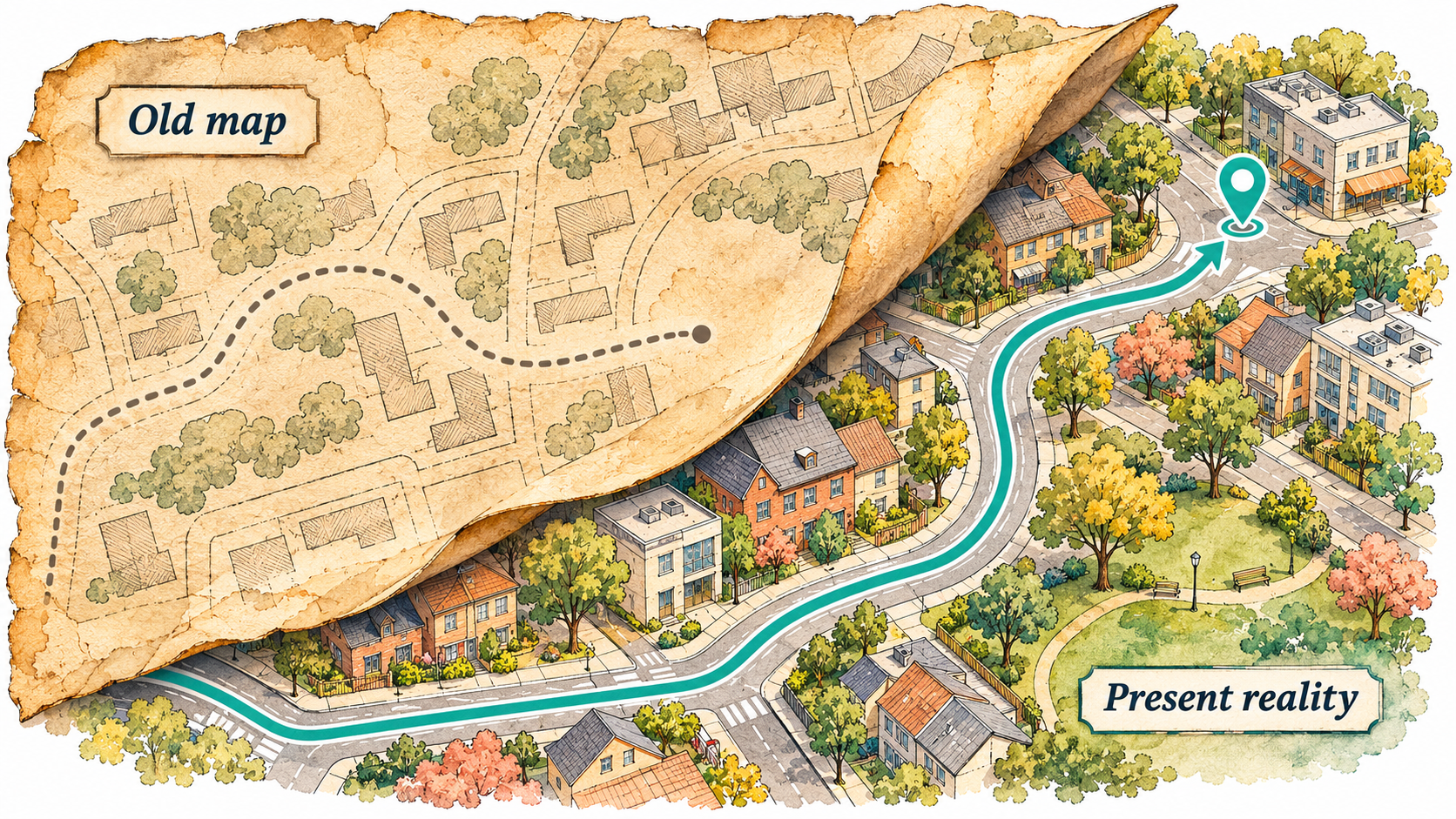
And then you could begin establishing a direction.
That’s what we’re doing here.
We’re not pretending that the AI landscape has stopped changing.
It hasn’t.
We’re not waiting for the technology to become simple or predictable.
It may never be.
We’re developing the human capability to navigate uncertainty more intentionally.
And that capability begins with attention.
Your Personal AI Focus Map is a first step.
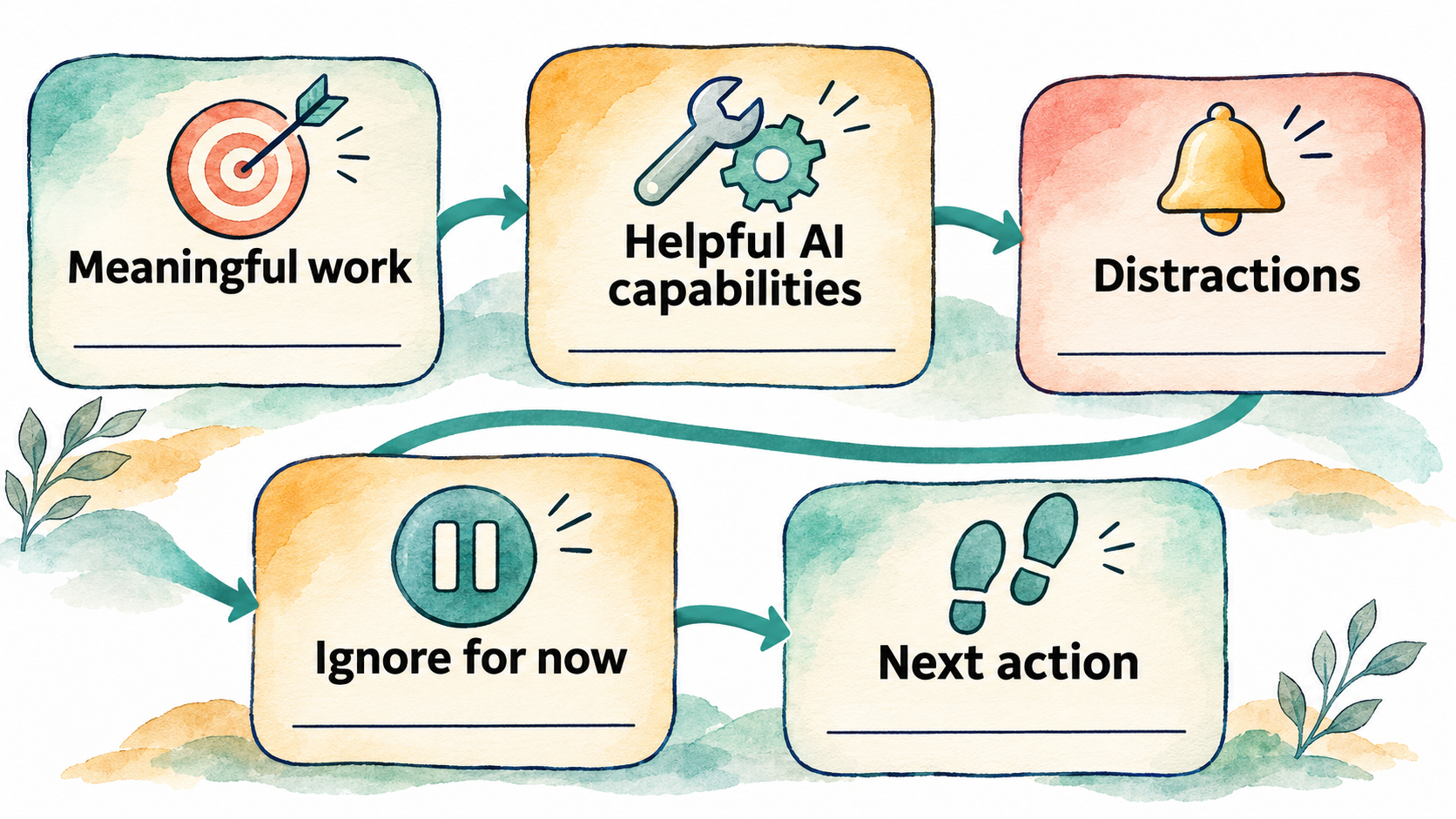
It helps you separate meaningful work from noise.
It helps you recognize when fear or hype is pulling you away from your priorities.
It helps you experiment with purpose.
And it gives you something practical to return to whenever the world begins feeling overwhelming again.
Remember, the Seven Stages are not a ladder you climb once and leave behind.
They are capabilities you can revisit as your circumstances change.
Even when you’ve developed a sophisticated Human-AI Operating System, there will be moments when you need to return to this first question:
What deserves my attention?
Because mastery isn’t the absence of uncertainty.
It’s the growing ability to respond to uncertainty with intention.
From Attention to Direction
We’ve taken an important first step.
We’ve recognized the condition of disorientation.
We’ve examined some of the forces that contribute to it.
And we’ve begun reclaiming control of our attention.
But attention alone isn’t enough.
You can become very focused and still move in the wrong direction.
You can eliminate distractions and still remain uncertain about where you’re going.
So the next question becomes essential.
Now that I’m beginning to control my attention, where am I, and where do I want to go?
That’s the question of our second stage.
Orientation.
And that’s where you should head next.